News
Guidance for confident skincare choices

5 surprising reasons you may be causing your eye eczema
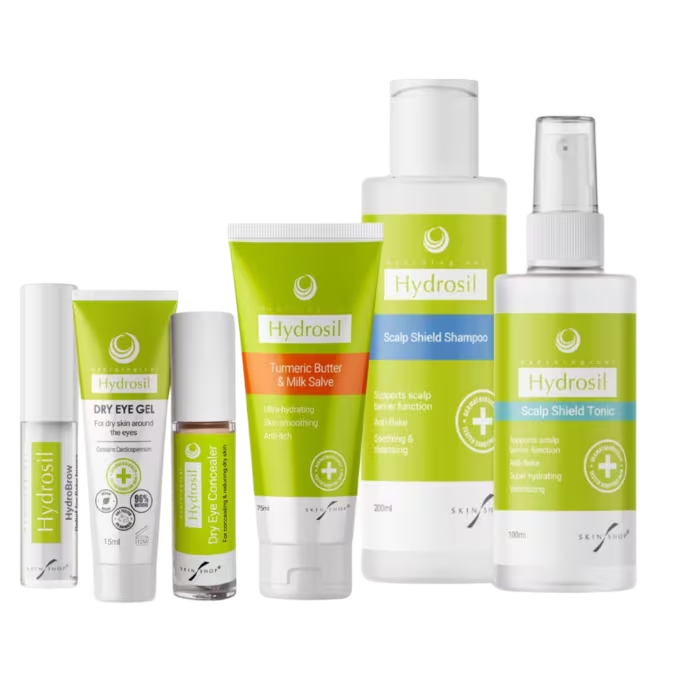
Although normal seborrheic eczema is largely genetic, eye eczema is more often caused by contact dermatitis, which is a skin reaction to external irritants. This is, in many ways, good news as it means that if you reduce exposure and increase protection for your eyes from the irritants, your eye dermatitis should improve. How do I know if I have eye eczema or eye dermatitis? If you only have eye eczema and don’t have eczema anywhere else on your body its more likely that your eye eczema is a form of contact dermatitis as opposed to seborrheic eczema. Contact dermatitis normally comes in two forms; irritant contact dermatitis and allergic contact dermatitis. How do I know if I have irritant eye dermatitis or allergic eye dermatitis? Irritant eye dermatitis Irritant contact dermatitis is the more common form and happens when a substance is harsh enough to damage your outer layer of skin which makes the skin around the eye very vulnerable as its much thinner than elsewhere on the face and so lets in irritants more easily. The skin reaction is normally immediate of within a few hours or days of the irritant coming in contact with the skin. Symptoms Symptoms of irritant contact dermatitis include almost immediate stinging and burning that then calms down and is followed by skin peeling and dryness. Causes Typical irritants around the eyes are solvents, alcohol and cleansing agents in many skincare and haircare products. Allergic eye dermatitis Allergic contact dermatitis, on the other hand, kicks in when your immune system overreacts to something. Often the reaction is not immediate but builds up over time as the skin becomes more and more fragile from the frequent exposure to certain irritants. Eye cosmetics are applied daily is a typical culprit for constant exposure to the same irritant that can lead to allergic contact dermatitis. Symptoms Symptoms of allergic contact dermatitis will usually cause gradually increasing itchiness and a red or raised rash that stays constantly present and does not come and go. Causes Typical causes of allergic dermatitis around the eyes are eye cosmetics, fragrances, lanolin and preservatives called parabens. Here are 5 things that could be causing your eye eczema; Make up remover Most make up removers contain solvents and alcohol. Solvents are chemicals that are designed to dissolve grease and dirt and are needed to break down eye cosmetics like mascara. Alcohol helps remove grease and residue from cosmetics. Sodium Lauryl Sulfate is an effective solvent used in the majority of make-up removers, making them a prime culprit for irritant contact dermatitis. Glittery or dark colour eye cosmetics Most eye cosmetics contain antimicrobial preservatives, a common one is diazolidinyl urea. Frequent exposure to this and other preservatives in daily eye cosmetics can lead to allergic contact dermatitis. Eye cosmetics can also cause irritant contact dermatitis, in particular those containing glitter particles or darker colours. The glitter particles themselves can cause minor abrasions to the skin around the eyes and on the eyelids leading to irritation. Eye cosmetics in darker colours require more dyes to keep their colour and these chemical dyes are more likely to cause irritation than lighter shades. Contact lens solution Preservatives in contact lens solutions can cause allergic contact dermatitis over time. It’s more likely to develop an allergy to contact lens solutions after you have used the same contact lens products for months or years than to immediately experience a skin reactions on the first few uses. Many people who have contact lens allergy around their eyes have no history of other types of skin allergies. Shampoo Most shampoos contain strong fragrances to make the hair smell fresher and harsh solvents to get rid of greasiness, so they can be the cause of both irritant dermatitis and allergic dermatitis around the eyes as the eyelids are exposed to the lather and residue from shampoos daily. Aside from highly fragranced shampoos, those with additional ingredients for lightening, straightening, colouring or for extra oily hair are likely to be the most problematic for eye dermatitis. Irritant and allergic dermatitis from shampoos can also appear on the scalp, but often the first signs of it are on the eyelids and behind the ears. Nail Varnish Another common yet widely unknown cause of allergic dermatitis around the eye area is nail polish, which occurs when people wearing polish rub their eyes. As with eye cosmetics the darker the colour nail varnish the more risk of allergic reaction. If you are or have been experiencing either form of eye dermatitis, have you considered trying Hydrosil Dry Eye Gel and Hydrosil Dry Eye Concealer? Hydrosil Dry Eye Gel is a light natural eye gel specifically for calming and relieving dry, itchy and irritated skin around the eye. It contains an extract of Cardiospermum halicacabum, which is a natural phytosteroid taken from a common Sri Lankan vine. The eye gel has been developed as an extremely gentle and light formulation suitable for itchy and dry skin around the eye often caused by allergic reactions and irritation from external irritants. The eye gel delivers anti-inflammatory and anti-itching benefits without damaging or irritating the delicate skin around the eye and can be used as often as required. Hydrosil Dry Eye Concealer also contains cardiospermum plus Biolin ®, a skin prebiotic which floods dry damaged skin with healthy skin flora to help repair the skin barrier and seal in moisture. The eye concealer not only conceals with a light to medium skin tone tint but also contains light reflecting particles to help brighten and illuminate the under eye area. Both Hydrosil Dry Eye Gel and Dry Eye Concealer can be applied daily and are ideal for use under make-up to protect and calm the skin around the eyes. The eye gel can also be worn overnight under other overnight skin care products. They are both free from parabens, perfumes MI and SLS and are 100% vegan. Find both Hydrosil Dry Eye products here
Learn more
5 tips to reduce vaginal dryness if you are not on HRT
Vaginal dryness is a common symptom experienced by 30% of women, although during menopause estimates are closer to 50%. Vaginal dryness is the result of decreased levels of the female sex hormone oestrogen. Oestrogen keeps the lining of the vagina lubricated and elasticated. Reduced oestrogen can be caused by varying factors, with menopause being the leading cause but also childbirth, side effects of multiple medications, depression, excessive exercise and smoking are also contributing factors. The most upsetting issue that arises from vaginal dryness is that is can cause pain and discomfort during sex. This can lead to a fear or lack of interest in sex which can be disruptive to relationships as well as undermine confidence and intimacy. Vaginal dryness can also cause discomfort during exercise and while inserting tampons. Aside from psychological issues, vaginal dryness can lead to physical damage due to abrasions and chaffing which can be sore and painful. HRT (hormone replacement therapy) is the go-to treatment for menopausal symptoms (including vaginal dryness) but many women today are choosing not to take HRT due to health concerns associated with it. There are ways to address vaginal dryness aside from HRT, and these methods can also be used by women with vaginal dryness who are not in menopause. Here are 5 tips to help reduce vaginal dryness of you are not on HRT; Vaginal prebiotics & lubricants The vaginal skin becomes thinner and more brittle with age. In addition after childbirth vaginal skin can be stretched and damaged. Intimate lubricants containing skin prebiotics designed specifically for vaginal use can help repair the damage and improve elasticity in internal vaginal skin as well as providing additional vaginal lubrication. Vaginal Antioxidants We have all heard about the importance of antioxidants for anti-ageing. Antioxidants mop up free radical damage that causes ageing of the skin and most beauty skincare products contain them. Like skin anywhere else on the body or on the face, vaginal skin also ages. Vaginal moisturisers containing antioxidants designed for vaginal use can help slow down the ageing process of vaginal skin, which helps improves moisture levels and elasticity and reduces thinning and weakening of the vaginal skin. Restoring vaginal pH Vaginal pH is lower than normal skin pH so using normal skin washes or soaps on vaginal skin, even those designed for sensitive skin, is likely to end up upsetting the pH of the vagina. When the vaginal pH is upset this can lead to itching and skin damage from an increase in bacteria or fungus that breeds more easily in the disturbed pH environment of the vagina. Once the skin is damaged, dryness often follows as vaginal moisture is lost through damage to the thin vaginal skin. Washes designed with a pH which is specifically suited to the lower pH of the vagina can help restore or maintain vaginal pH balance to reduce or prevent itching and abrasions and the subsequent dryness caused by an increase in fungal or bacterial growth in the vagina. Natural progesterone cream Natural progesterone creams is are a recently popular way to address mostly vaginal dryness and hormonal fluctuations relating to low mood and vaginal dryness outside menopause and for women who do not want to take HRT during menopause. Although you can get progesterone creams without prescription as they are not classed as HRT or medicines, it’s not recommended that you take them without consulting your gynaecologist as they can have some side effects. However, used in the right doses and for limited periods of time, natural progesterone creams can considerably help reduce vaginal dryness as well as improve low mood. High dose Vitamin C Vitamin C plays an important role in the formation of collagen as well as being a precursor for the production of oestrogen. High dose daily vitamin C (1000mg) can help increase collagen production and contribute towards maintaining production of oestrogen. Our almost 100% natural and perfume-free In2mate Skincare products help replenish vaginal dryness and restore vaginal health Vaginal repairing prebiotics In2mate skincare contains a patented prebiotic Biolin ®, proven to feed good flora in the vagina. Biolin ® also repairs and strengthens vaginal skin damaged by age-related thinning, chaffing and abrasions. Vaginal anti-ageing antioxidants In2mate products are one of the first intimate skincare products to contain a patented antioxidant PROTEOLEA® which has been proven to help rejuvenate delicate areas of skin by slowing down age-related damage. This process helps improve flexibility and moisturisation. Natural lubrication In2mate products contain natural lubricant Levan, a natural plant fructose that protects plants against damage from frost and drought by locking in moisture via the formation of a natural micro film over the plant’s surface.Used on the skin it does the same thing, helping lock in moisture and giving skin a smoother more slippery feel. The right vaginal pH In2mate products keep vaginal at a pH of 4.5 or below. Normal skin is not as acidic as the vagina. Any product whether it’s a moisturiser, lubricant or wash will also be in contact with skin near the vagina. So In2mate have struck a healthy balance between the skin around the vagina and the tissue within. 4.5 is the perfect pH ‘balance’ because it’s not too high for the vagina and not too low for the skin. The In2Mate skincare range is over 99% natural and VEGAN and includes a gentle, non-perfumed intimate wash, a light non-sticky non-perfumed intimate moisturiser and a natural-feeling non-perfumed rejuvenating lubricant. Find our in2mate products here
Learn more
10 tips to manage seasonal fibromyalgia joint pain flares
How to reduce seasonal joint pain & muscle pain from Fibromyalgia Seasonal changes are a time when fibromyalgia pain flares are often triggered more often and more intensely. The move from summer to winter is potentially the worst seasonal change for fibromyalgia sufferers and can lead to severe seasonal joint pain and muscle pain. The sudden change to cold mornings and evenings but with still warm weather during the day plus frequent rain showers caused by low pressure weather systems can bring agony to joints and nerve endings that are sensitive to barometric fluctuations. Here are 10 tips on how to reduce seaonal change fibromyalgia joint pain flares Keep wearing sunglasses Even though it might feel strange wearing sunglasses during autumn the lower level of the sun and the frequent changes from cloudy skies to suddenly bright sunshine can bring on a fibro linked headache. Try not to turn the heating on too early If you can wrap up more in the house to avoid turning on the central heating. Due to big fluctuations in temperature during autumn you can end up getting too hot and cause swelling if the heating get puts on too early and then the weather warms up a bit. Wait until its consistently cold before turning on the central heating. Do more mobility exercises on rainy days Predict that rainy days in Autumn are likely to bring on additional joint pain so make a point of doing more regular mobility exercises during rainy days to try and prevent joints getting stuff and painful. Get a de humidifier Humidity is an enemy to most fibromyalgia sufferers and autumn is a prime time for heightened humidity. A de humidifier can really help pull that extra moisture from the air and not let is creep into your joints. Purchase an electric blanket As the evenings cool so do your sheets. Reduce the change from warm to cold when you get into bed by getting an electric blanket to take the chill off the bedsheets before you get in. Use a second light duvet rather than extra blankets or throws As the weather gets a little colder its natural to want to start putting more blankets on your bed, Just the weight of heavier blankets or throws on you at night can be enough to make skin feel rasped or pressurised. Using two summer duvets or a double winter duvet will keep you just as warm but put less pressure on your skin. Put on your outdoor coat for 15 minutes before you leave the house Pulling on an outdoor coat and then suddenly being in the cold weather outside can be a shock to sensitive joints and skin. If you put your outdoor coat on for a period of time to let the inside of the coat warm up before you leave the house this can limit the suddenness of the change in temperature between indoors and outside. Start to wear gloves even though it’s not that cold Due to the humidity and dampness of the Autumn your skin on your hands often gets damp and then if a wind is blowing this will make the skin cold, even if the rest of you is not that cold and weather is still mild. Wearing a thin pair of gloves can help avoid this damp chill on the hands which can cause pain flares in finger and hand joints. Be more aware of what time you leave the house Even if you prefer to get out of the house in the early morning or for evenings walks, in Autumn try to wait if you can until around the middle of the day, this is when the weather is usually at its warmest and the sun at its highest. It will be less damp and cold and also you will get the most amount of vitamin D which is good for your bones and your immunity. Use a daily preventative anti-inflammatory treatment Prevention is key during the Autumn transition months. It’s better to predict that your pain levels may rise during this period and take action before they do. One of the biggest issues with constantly fluctuating temperatures and barometric pressure is swelling. Begin using a daily non-medicated anti-inflammatory that you can use daily (without any negative side effects) on the areas where you know you are most likely to get swollen joints. In Autumn fingers, toes and knees are always common places where you start feeling the pain most. Try an effectuve alternative or complimentary treatment to standard painkillers to help reduce risk of stomach upset and reduce your reliance on painkillers, such as Celafen Joint Rub. Celafen is not a fibromyalgia cure but it is a drug-free treatment that can quickly ease the pain and swelling in joints without any negative side effects. Celafen contains a unique clinically tested patented ingredient called Celadrin®, a special complex of esterified fatty acids (EFA’s). Celadrin® has been shown in published research to deliver effective pain relief to stiff, painful joints within just 30 minutes, making it 15% faster than conventional painkillers. Celafen is a natural product that works by lubricating the cell membranes and repelling inflammatory chemicals responsible for the pain, stiffness and reduced mobility associated with various forms of joint pain. It can be used as much as is necessary without negative side effects.
Learn more
Cold Sore Remedies – Liquorice Balm the must-have product for your cold sore prone lips
As we all head back to the office or back to school and the season for colds and flu kicks in, Autumn is a danger zone for cold sore outbreaks. Approximately half the population carries the herpes simplex virus that’s responsible for cold sore outbreaks, with approximately 25-30% of carriers experiencing regular cold sore outbreaks. Triggers for cold sores outbreaks include sun, stress, a lowered immune system from colds and flu, chapped lips from cold weather, any trauma to the lips and hormonal fluctuations. Follow these tips to help prolong the period of time between cold sore outbreaks as well as reduce their severity. Tip 1 – Throw out your toothbrush If you have been using a toothbrush during a live cold sore outbreak you should throw it away as soon as the cold sore has gone. Toothbrushes are ideal vessels for carrying the cold sore virus and can easily re infect you again after a cold sore has gone. Tip 2 – Boost your immunity Taking zinc and vitamin c supplements to boost your immunity over the winter months can help prevent you getting a cold which in turn is likely to reduce your risk of getting a cold sore outbreak. Tip 3 – Wash your hands After touching your lips to apply cold sore remedies, even if the cold sore has not broken out yet, always wash your hands afterwards. Tip 4 – Apply Lip Balms with a cotton bud If and when applying lips balms, always use a clean finger to get some balm and never put your finger into the balm pot again after applying to your lips without washing your Finger. Alternatively use a clean cotton bud to remove a bit of lip balm from the pot and then rub in with your fingers once on your lips. This helps not to spread the virus from your lips back into the lip balm pot. Tip 5 - Wear an SPF In sunnier weather or when your lips are exposed to increased sun such as on winter holidays, always wear SPF lip protection. Be aware that many SPF lip products dry out the lips so apply a balm under the SPF and remove it as soon as you are out of the sun and apply more lips balm to re moisturise lips. Tip 6 – Treat the tingle not just the sore At the first sign of a cold sore, which is usually a tingle on the lip where the cold sore will eventually break out, begin preventative treatment immediately. Tip 7 – Drink Liquorice Tea Liquorice exact has anti-viral properties in it that are particularly effective against the cold sore virus. Drinking liquorice tea daily can help protect against cold sores. Yogi Tea do a good high potency liquorice tea. Tip 8 – Don’t sip hot stuff Avoiding sipping very hot tea or coffee. This can cause small blisters on the lips which can then develop into cold sores. Any trauma to the lips, in the form of cuts, chaffing, blisters or dryness can make the skin on the lips weaker which allows the cold sore virus to re-surface and take hold. Preventative remedies for cold sores - Lip Q Liquorice Balm Unfortunately. there are limited products to treat cold sores once they appear and even fewer to use in between outbreaks to try and help prevent them. Most medicated cold sore treatments can only be used once a sore appears. Lip Q Liquorice Balm is one treatment that can be worn in between outbreaks and is a natural but highly effective treatment to help prevent cold sores appearing as frequently and reduce their severity. The key cold sore fighting ingredient in liquorice is glycyrrhizic acid (GA). GA specifically targets the genes that are required to maintain the virus in its latent state by interfering with the production of special proteins that feed the infected cells. Research published in the US Journal of Clinical Investigation has shown that liquorice has the ability to weaken the cold sore virus which lies dormant in the skin between outbreaks.(1) Lip Q liquorice lip balm was found to be effective in a double-blind trial, carried out by the Herpes Viruses Association. It reduced the severity and duration of outbreaks for over 73% of subjects tested and, furthermore, 83% of subjects using the liquorice balm reported experiencing less outbreaks than when using their conventional treatments. While using the liquorice lip balm, testers reported that on average their outbreaks were only half their normal length and the time between outbreaks was much longer. Unlike conventional treatments, due to its naturally derived ingredients, the balm can be worn at all times without any negative side-effects, meaning that it could be used before and during festivals to prevent cold sore outbreaks. Marian Nicholson from the Herpes Viruses Association says; "We were aware of the research on liquorice and were interested in carrying out an in vivo trial. Quite often results which look impressive in a test tube are not as effective in real life testers. However, Skin Shop’s Liquorice Balm has performed well with respondents showing a marked reduction in severity and duration of their cold sore outbreaks. In light of this research we are happy to recommend this treatment to our members." Liquorice Balm is 100% natural and is FREE from parabens, perfumes, MI and SLS. Find our Lip Q Liquorice Balm here
Learn more
There’s no need to cover acne-prone skin to make it look beautiful – three testers try out a new Nordic no cover no colour foundation primer with stunning results
<h2>Wearing a lot of make up to cover up your acne isn’t good for your acne and why are you doing things to make things easier for other people rather than what is best for your skin?</h2> <p> </p> <p>As more and more acne sufferers are trending towards embracing their acne instead of trying to hide it with thick foundation and making their acne worse in the process, a new generation of clear foundations that are actually beneficial for acne is the new ‘make up’ for skin prone to acne.</p> <p> </p> <p><img src="https://www.skinshop.co.uk/media/wysiwyg/make_up_.jpg" alt=""></p> <p>Our new bioactive mattifying primer is a no colour no cover foundation that blurs imperfections and instantly mattifies skin tone without clogging up pores with gloopy thick foundation.</p> <p> </p> <p>We use two Nordic tree bark extracts to promote healthy skin microbiota and create an instantly mattified and smoother skin tone in acne-prone skin.</p> <p> </p> <p>Clarol Nordic Birch & Willow Primer uses birch sap extract taken from the bark and trunk of the Silver Birch tree (Betula Pendula), which is grown in Nordic countries, in particular Finland. Its bark and sap extracts are used in traditional Nordic medicine to treat skin inflammation and infections of the skin.</p> <p> </p> <p>Silver birch is widely used to smooth out skin tone and rejuvenate damaged skin in Finnish sauna and complimentary health culture.</p> <p> </p> <p>The sap from the birch tree is easily converted into a bioactive skincare ingredient which studies prove helps improve elasticity and integrity of damaged skin as well as offering an immediate skin-smoothing action due to the natural film-like composition of the birch sap.</p> <p> </p> <p>Willow bark, incorporated in the patented ingredient Trikenol ™, grows in abundance in Nordic regions and is used traditionally in Nordic skincare. Trikenol ™ is proven to help repair skin microbiota and reduce sebum production, offering an instantly mattifying effect.</p> <p> </p> <h3>Here three acne prone testers try Clarol Nordic Birch and Willow Primer as a clear foundation with incredible results; </h3> <p> </p> <h4>Amy Jamison, 23, County Down, Northern Ireland</h4> <p> </p> <p>“The Clarol Primer gets rid of the oily look from my face and gives me more of a matte and softer focus finish! Even though it doesn’t cover my acne or my scars fully like coloured foundation, this product has been perfect for me recently as I am trying to wear less makeup to help my acne improve. With this primer I feel I can get a smoothed, matte look without having to put coloured or clogging foundation on!’</p> <p> </p> <p><img src="https://www.skinshop.co.uk/media/wysiwyg/Amy_Jamison_before_and_after_Clarol_Primer_only.jpeg" alt=""></p> <h4>Daisy Welch, 25, Milton Keynes</h4> <p> </p> <p>“Clarol Primer helps to blur my pores, helps my un even texture and gives me a nice smooth and matte finish without having to plaster on foundation! I haven’t found a primer that works as well as this one on my acne prone skin. I often use it on its own without make up or if I’m going to put make up on I use it as a base and I don’t need to use as much make up as I used to. It also helps to prevent breakouts too due to its ingredients and not being heavy on my skin! It’s a light weight texture and I either use my hands or use a makeup brush to buff into the skin!</p> <p> </p> <p><img src="https://www.skinshop.co.uk/media/wysiwyg/Daisy_Welch_before_and_after_Clarol_primer.JPG" alt=""></p> <p> </p> <h4>Oonnagh McLaughlin, 25, Co.Derry, Ireland</h4> <p> </p> <p>“I have acne rosacea and I couldn't believe how smooth the Clarol Primer feels on my skin. I've been using the primer on its own without any foundation and have been loving it. I really notice the difference as it helps blur my scars and pigmentation.”</p> <p> </p> <p><img src="https://www.skinshop.co.uk/media/wysiwyg/Oonaugh_before_and_after_primer.jpg" alt=""></p> <p> </p> <p><a href="/products/clarol-nordic-birch-japanese-algae-primer">Find Clarol Nordic Birch & Willow Primer here</a></p> <p> </p> <p> </p>
Learn more
5 tips to make acne prone skin look better without using concealers or foundations
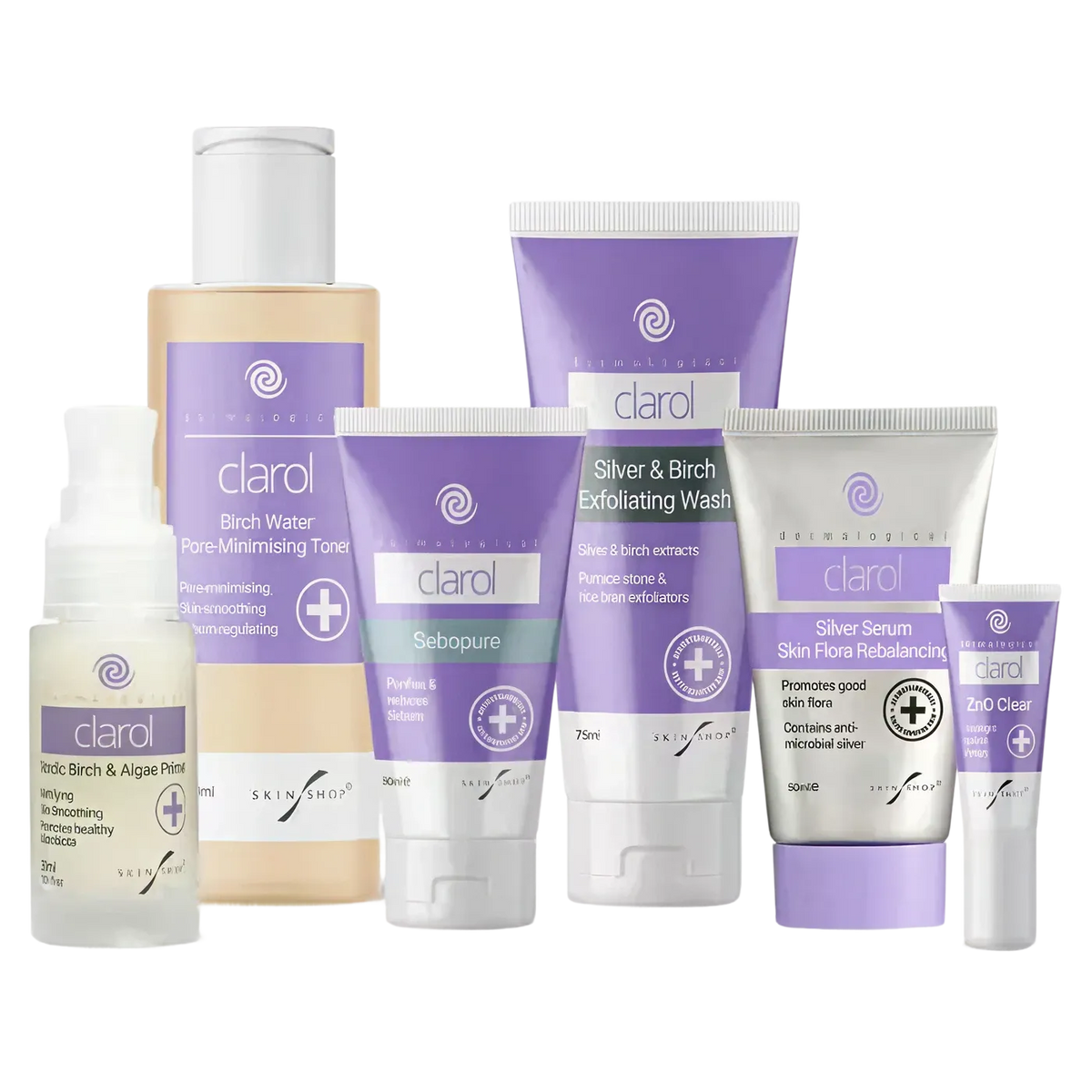
All forms of concealers and foundation are bad news for acne-prone skin and are often responsible for a whole host of acne causes. Even those that are supposedly designed to be for sensitive skin or skin prone to acne, foundations, powders or concealers that offer a ‘blanket’ cover for skin are far from ideal for acne prone skin. Simple tips to make acne prone skin look better without concealers and foundations However, having acne and not wearing foundation or concealer isn’t easy as for many acne sufferers as these are the essential camouflage tools. Most foundations and concealers do not let the skin breath. They also tend to clog up pores and attract an excess of bacteria and dirt that stick to the foundations and make matters worse for acne-prone skin. If your skin is oily, the oil can mix with the foundation or concealer creating a breeding ground for rancid sebum and bacteria, which can lead to more acne out breaks. The best thing anyone can do for their skin if they are prone to acne and to help improve their acne is to go make up free as often as possible. There are several things you can do to help make acne prone skin look better and give you confidence to go without the use of foundations and concealers which in the long run will hugely benefit your skin as well as improve your acne. Here are 5 tips to improve the look of acne prone skin without concealers or foundations; Use a pore minimising and skin tone balancing toner Open pores and uneven skin tones are the bane of most complexions from to acne. Although for a while toners have been out of fashion in skinacre , now they are back and better than ever. Modern toners designed to reduce pore size and even out skintone are excellent for use on acne prone skin as they clean and calm skin while balancing tone and closing up open pores, making skin appear more even and smoother. Exfoliate daily Daily gentle exfoliation is one of the best ways to improve the appearance of acne prone skin. The exfoliation generates new skin growth which can help remove dead skin and dirt build up on the surface of the skin and give the skin a healthier glow, reduce surface black heads and pustules as well as make skin appear smoother. Use a ‘colour free’ mattifying primer A new breed of primers are doing far more than just priming skin. Modern primers can do everything from feeding the skin with good bacteria to smoothing skin texture, blurring imperfections and mattifying complexions, all of which are essential for improving the appearance of acne-prone skin. Primers still let skin breath so using a non pigmented mattifying primer as opposed to a thicker pigmented foundation can help skin look less shiny and smoother. A mattifying primer used after exfoliation will result in a significantly cleaner, smoother and less shiny complexion. Primers can also be used on all skin tones. Use a mineral blusher Mineral make up powders are much better for acne prone skin and a light mineral based blusher powder helps accentuate cheek bones and give a fresh faced touch of colour without clogging skin or aggravating areas of skin prone to acne. Accentuate eyes, brows and lips By focusing on making up eyes and lips, the areas of acne prone skin are less obvious. When larger areas of skin are pitched against the more accentuated features of the eyes and lips, the skin by comparison looks more uniform and therefore less attention is draw to areas of acne. Use brighter heavier colours on the lips and accentuate the eyes and brows. Shop our Clarol range for acne prone skin If you are looking to try and wear less make up in order to improve the texture of your skin and reduce your acne, take a look at our products targeted specifically for acne-prone skin. All of our products in this range are suitable for people with both teen acne and adult acne. Calrol products help reduce the appearance of acne and build up the skin's natural acne fighting defences resulting on a preventative effect on future breaks outs. All Clarol prouducts are chemical free, alcohol free, dermatologically tested for sensitive skin, vegan and not tested on animals. Shop the Clarol range here.
Learn more
Eye eczema made me want to scratch my eyelids off until a vine gel finally gave me relief
Eye eczema is typically a form of contact eczema, usually triggered by contact allergies to cosmetics, as well as sun creams, contact lens solutions and other anti-ageing beauty products. Eye eczema or dermatitis is a skin condition that's on the rise among middle-aged women who have spent typically two decades applying eye cosmetics daily until eventually their skin developed an intolerance to cosmetics. Cortisone and steroid creams are not suitable for use on skin around the eye area as the skin there is too delicate and the steroids are too harsh. So eye eczema treatment for this very common form of eczema are limited as non-steroid emollient creams used for body eczema are too heavy for the delicate eye area. Elaine Wright, 51, is a married civil servant from Castleford in West Yorkshire who eventually found a solution for her eye eczema in Hydrosil Dry Eye Gel, a light quickly absorbent gel containing a vine extract of cardiospermum, commonly known as a 'phytosteroid' that can quickly relieve itchy, inflamed and irritated skin and is an effective natural eye eczema treatment. Phytosteroids perform similar functions to chemical steroids but are naturally sourced from plants and can be used daily as opposed to only for limited periods of time. They can also be used on more delicate areas of skin as they are not as damaging are chemical steroids. Elaine says: “I’ve never had eczema even as a child, but a year and half ago I started to develop itchy eyelids. It started off as a mild irritation but over a few months developed into a constant excruciating itch that left my upper eyelids and the lower eye lid of the left eye red raw, swollen and very dry. When I couldn’t bare it any longer I went to the doctor and was prescribed a cortisone steroid cream, at 0.5 percent. But my doctor said I should take care when using it and only use it for a week as apparently its quite dangerous to use steroid cream on the face at all and especially around the eyes. The side effects can cause permanent damage or discoloration to the skin if you use them for too long. Obviously this worried me, but my eyes were so painful I was prepared to take the risk. Over the week of using the steroid cream my eyes did improve and I felt some relief from the itching and soreness but as soon as I stopped the steroid cream after a week the eczema came straight back. Within days of stopping the steroid cream, the skin around my eyes became itchy, red and quite swollen. I had to completely stop wearing all eye makeup and the skin was too sore to touch anyway. I know eye eczema is not the worse condition in the world, but I was getting quite down about it as it was so irritating, I could feel it all the time. At night it would wake me up and I’d feel like I wanted to scratch my eyelids sometimes as it was so itchy and sore. In the mornings and my eyes would look exhausted and red. I didn’t want to resort to the steroid cream again but there was nothing specific available in the chemist and the doctor didn’t have any other suggestions so I decided to investigate some alternatives myself as I felt there had to be some kind of alternative to steroids. I simply put ‘eczema on eyelids’ in a search into Google and was surprised to find it was much more common than I realised with a lot of blogs and discussions about it. The most-stand out reviews I found that were most relevant to my symptoms were on an eye gel called Hydrosil Dry Eye Gel. The eye gel contained a natural vine extract from Sri Lanka, called cardiospermum halicacabum. There were several studies cited that showed this vine extract helped with eczema. There were also so many positive reviews on the eye gel from people with eye eczema symptoms that sounded exactly like mine that I decided to give it a go as it wasn’t expensive and could be ordered in the UK. As soon as I put the Hydrosil Dry Eye Gel on for the first time I knew it was going to help me. There were a few seconds when it stung a bit when I first applied it as my skin was literally an open wound, but within minutes my eyes felt instantly calmer and less itchy. It took a few weeks for my eyes to really improve but every day they felt a little bit better after applying the eye gel. Since using the Hydrosil Dry Eye gel twice daily over the ten months I’ve only had to resort to my steroid cream once and only for a few days. The eye gel seems to keep the eye eczema away for several months at a time and the bad flare ups that I was having every few weeks before are now rare and they’re gone almost as soon as they arrive. I can wear eye make up again if I out the eye gel on first, which is fine as it’s a light gel and make up goes easily over it. Not only has my eye eczema cleared up, the skin around my eyes feels much softer and less crinkly than it was. I used to look tired all the time as the skin was so dry and red around my eyes. The Hydrosil Dry Eye Gel has been a complete saviour for me and I’d recommend it to anyone suffering from eye eczema who’s worried about using steroids near their eyes. The vine ingredient in my eye gel has impressed me so much I’ve ordered the dry skin gel containing the same ingredient but in higher concentrations for my son to try as he suffers from eczema on his body and I’d prefer him to try and not use steroid cream too.”. Hydrosil Dry Eye Gel contains an extract of Cardiospermum halicacabum, which is a natural phytosteroid taken from a common Sri Lankan vine. A UK trial and several published studies published studies * prove cardiospermum’s calming and restorative effects on inflammatory conditions of the skin including eczema and dermatitis. Hydrosil Dry Eye Gel has been developed as an extremely gentle and light formulation suitable for very sensitive, itchy and dry skin around the eye. The eye gel delivers anti-inflammatory and anti-itching benefits without damaging or irritating the delicate skin around the eye and can be used as often as required. Hydrosil Dry Eye Gel can be applied daily to dry, itchy skin around the eye and is ideal for use under make-up and is FREE from parabens, perfumes MI and SLS and is 100% vegan. Available from www.skinshop.co.uk
Learn more5 new facts about acne
Acne treatments don’t work as well on women Acne cures don't work as well on women. One study showed that 82% of persistent female acne sufferers failed therapy with multiple courses of antibiotics, and 32% had relapsed after treatment with one or more courses of isotretinoin (1) Acne makes adults depressed A recent study of approximately 2,000 acne sufferers, commissioned by the British Skin Foundation, revealed that 63% of respondents felt that the condition had affected their self-confidence and 20% had considered or attempted suicide. Adults may be more self-conscious of their disease, and experience more social anxiety and isolation, as acne is still largely considered a disease that primarily affects teenagers. PCOS (Polycystic Ovary Syndrome) is a high-risk factor for acne Approximately 25% of women with PCOS will have acne Scarring from acne is becoming more common According to the Acne Academy, facial acne scarring now affects up to 20% of people with acne Acne is on the rise in adult women According to the Journal of the American Academy of Dermatology, 54% of women over the age of 25 now have some form of adult acne. Even celebrities who have access to the best skincare available suffer from adult acne. Ref’s Ref Goulden V, Stables G, Cunliffe W. ‘Prevalence of facial acne in adults’, J Am Acad Dermatol, 41(4) (1999), p. 577-580. Lowenstein E J. ‘Diagnosis and management of the dermatological manifestations of the polycystic ovary syndrome’ Dermatol Ther, 19(4) (2006), p. 210-223. Ref: Collier CN, Harper JC, Cantrell WC, Wang W, Foster KW, Elewski BE, ‘The prevalence of acne in adults 20 years and older,’ J Am Acad Dermatol, 58 (2008) pp.56-9.
Learn moreRe-sync your skin flora to combat post-summer acne
Are you wondering why after a lovely relaxing stress-free summer break your acne has returned and your skin feels flaky, over-sensitive and dull? Surely you should be glowing with health, right? Unfortunately, skin is a particularly complex and tricky part of our body and what might be good for our soul and mind may not be reflected in our skin. Traditional beauty advice will be telling you to moisturise and exfoliate your post-summer skin as the best acne cure. But new research suggests that it might be a completely different problem that’s causing your post-summer skinmare. Your lovely relaxing summer holiday may have knocked your skin flora out of sync. Skin flora is the good bacteria that sits on the surface of your skin fighting bad skin bacteria and also maintaining a healthy skin barrier function, which keeps skin hydrated and stronger. However, if levels of good skin flora are depleted, then this can wreak havoc with your skin, leaving it wide open to an assault of bad skin bacteria which leads to acne and breaks outs. It can also cause a weakened skin barrier function which leads to dryness, flakes and increased sensitivity. A study presented at the Microbiology Society in April (2017) in Scotland and published in the journal Scientific Reports found that, “an unbalanced population of bacteria on the skin may play a major role in acne.” The study authors concluded that "new acne therapies should focus on shifting the balance toward a healthy microbiota by targeting harmful bacteria or enriching beneficial bacteria. What causes skin flora to become out of sync? The biggest summer holiday culprits for disturbing the delicate skin flora balance are an increased use of chemical sun creams, more frequent exfoliating and anti-bacterial cleansing due to greasy summer skin, chlorine from pools, sun burn, skin dehydration from flights and excess sweating and cheap hotel skincare and hair care products. Once the skin flora balance is out of sync, it can take months to repair the damage as the skin desperately tries to be build its natural skin flora reserves. The problem is that once the skin has been weakened due to a drop on skin flora, bad skin bacteria comes rushing in on an all-out assault and it can take a long time for the good skin flora to fight back and restore and healthy balance of bacteria. During this process, the skin in more vulnerable to acne break outs, dryness, flaking, sensitivity and redness. What can help restore skin flora balance? Reduce usage of anti-bacterial washes or cleansing agents. The key to restoring a heathy skin flora balance is to stop killing off the good bacteria that is trying to re grow on your skin with anti-bacteria agents. Sure, they kill the bad bacteria too but they don’t care about the good stuff, they just kill all bacteria. Stop exfoliating. Your skin is likely to be quite sensitive and dry in patches if your skin flora is out of sync. Good skin flora needs healthy skin oils to feed off and exfoliating just strips them away. Let your skin produce sebum – If you suffer from acne you are always worried about sebum. But sebum is your skin’s natural moisturiser. If you try and reduce sebum or keep washing it off when you skin flora is out of sync, your skin will stay dry and weak and the skin flora will take longer to re build. And besides, sebum is not the enemy to acne. Its only sebum that has become oxidised when it reaches the surface of the skin and mixes with oxygen and external bacteria that it becomes a problem, as then it becomes rancid and can then cause inflammation and pore blockages that lead to acne. So keep letting sebum flow freely but keep it pure so it doesn’t go ‘rotten’. Try Clarol’s Sebopure, a product that contains a natural sebum preserving ingredient that stops the sebum from oxidising and becoming rancid as it passes out through the skin pores. Using this method, the skin can get re-hydrated naturally via the sebum production while reducing the risk of blocked pores that lead to break outs. Re-Balance your skin flora with Clarol’s Skin Flora Re-Balancing Serum. This product contains a smart natural anti-bacterial ingredient that only attacks bad skin bacteria while leaving good skin flora to flourish and multiply. This product helps the skin to re-populate itself with good skin flora while keeping bad skin bacteria outside the castle gates.
Learn more
Woman diagnosed with acne actually had rosacea and the medications made it worse until she discovered Kalme products
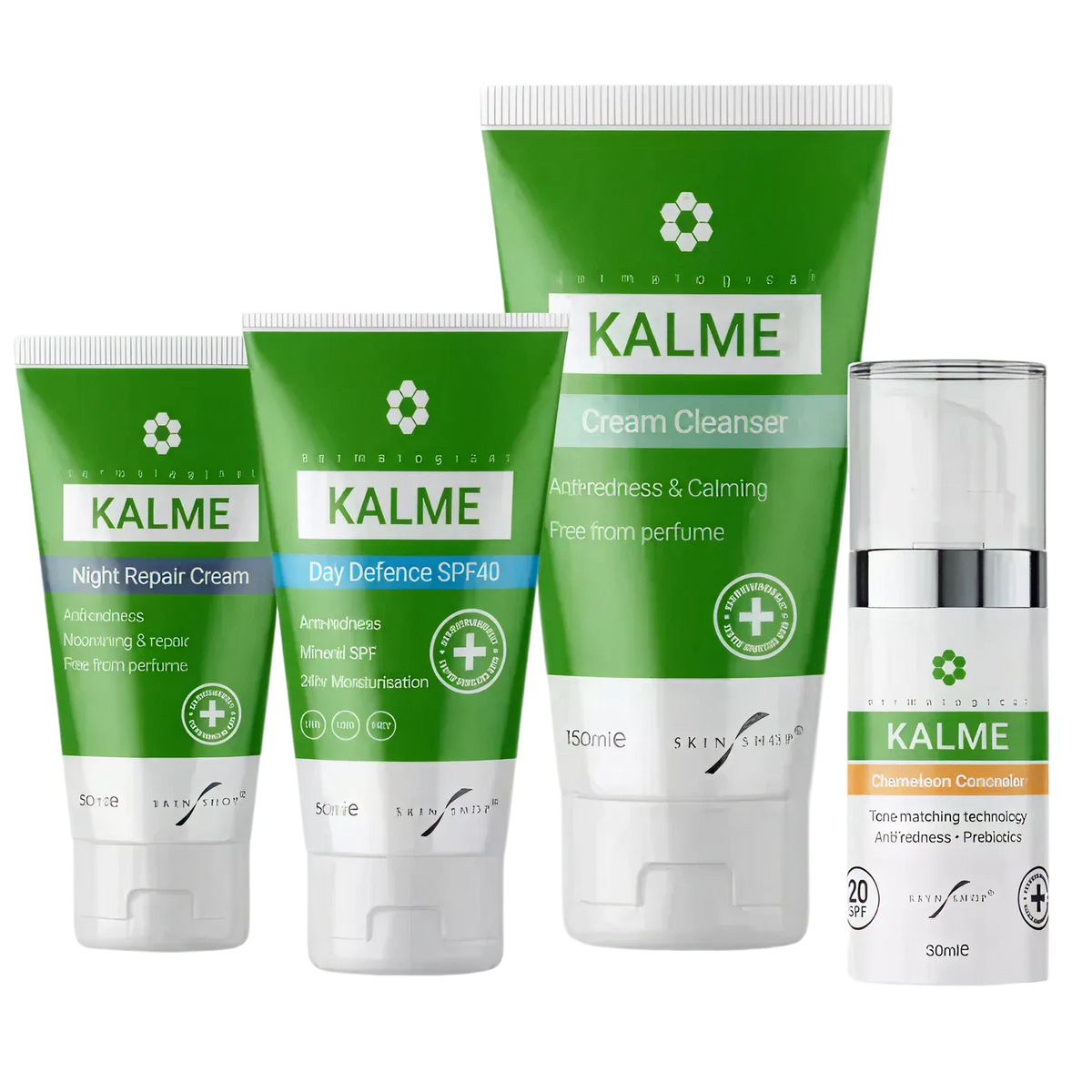
Rosacea is a very complex skin condition and in many cases people, especially if they are young, are misdiagnosed as having acne rather than rosacea. The danger of this is that acne medications are completely unsuitable for rosacea and can make the symptoms much worse as this young woman found out. Emma Scholz, 29, an IT consultant from London. Emma says: “I'd been suffering with severe rosacea for almost seven years and until I discovered Kalme skincare, I honestly thought there wasn’t going to be anything that was going to save my skin as I’d literally tried everything. My rosacea started very suddenly when I was 20. Before that I had near perfect skin. As a teen I had no spots and my skin has always been a lovely colour and clear. I woke up one day and my face was a bit red and felt sore and my cheeks felt dry and tight. At the time I was at university studying in Southern Spain and so I thought it was just sun burn as I’d been out and about in the sun the previous day. But from that day, it just got worse and worse. First it was the soreness and the dryness, then the redness and then came the bumpiness and the intense itching, usually in that cycle. It started just in my cheeks but within months it had spread over most of my face and down my neck. At first, I thought maybe it was acne because of the heat or the sun creams I was using most days. So I tried all the usual treatments for acne, like anti- bacterial washes, scrubs, that kind of thing. All these products just made my skin worse and as time went by they started to really sting when I put them on my skin and my skin would go very red and then extremelydry and itchy after using them. My skin felt utra sensitive and very reactive so I switched to products for sensitive skin as opposed to acne to see if that worked. It didn’t, my skin still carried on getting worse. The redness was almost permanently there now, and my skin was so sore it hurt even to apply make-up. However with the state of my skin as it was there was no way I’d consider leaving the house without make up on, so I just had to bare the pain. The problem was that as my skin got worse I was applying more and more make up to try and cover it up. By this time, I’d left university and was working in my first job. In such a professional environment where I was still relatively young compared to the people I worked with I felt I couldn’t turn up to work with red spotty skin like some teenager so I was using a lot of make up to try and disguise my skin as much as I could. After years of battling with my skin I finally went to a dermatologist as I was beginning to face the fact that there was something wrong with my skin and it wasn’t just a passing phase or due to the sun or heat. The first dermatologist I saw diagnosed me with adult acne and prescribed an acne cream. It stung like hell and made my skin furious. I carried on anyway hoping it was just my skin adjusting to the treatment, but it became so painful I had to stop using it. I felt having tried so many acne treatments that this diagnosis just wasn’t correct, so I sought a second opinion. The second dermatologist immediately diagnosed me with rosacea. He said I was quite young to get it and that was why perhaps I had been misdiagnosed the first time, as most rosacea sufferers don’t start experiencing symptoms as severe as mine until well into their 40’s. I was prescribed a topical cream plus tablets. The cream did not really improve my skin in general. I went back to the dermatologist several times and was prescribed a series of different creams, some of which worked better than others, but all stung my skin and the results, if they were good, were often short lived and my rosacea would return with renewed ferocity. The severity of my rosacea fluctuated a lot. During my period I’d get it much worse and so every month I’d dread the onset of another flare up. It was also affected by what I ate and drank, namely alcohol and anything spicy. Some days my skin got so bad I was unable to go to work because my face was so painful I could barely speak. I’d have to just stay at home in the cool and try and calm my skin down with cold flannels. There would sometimes be days when I simply didn’t leave the house as my skin felt so raw and painful I just didn’t want to go outside. My family were getting worried about me as I was clearly getting quite depressed about my skin. But I would just brush off their concerns. I think I was still in some degree of denial that my skin was in such a state. I kept thinking it would just go one day and everything would return to normal, even though I’d been told by my dermatologist that rosacea was life-long condition and would never simply ‘disappear’. I simply didn’t want to talk about it to anyone. My close friends said nothing about my skin even though it was obvious there was something very wrong. I think they sensed how upset I was about it and so felt it was better to just not mention it. I was getting very distraught by this time. I’d spent years trying different prescription creams and nothing really seemed to be working. Fed up with the lack of results, I went back to my dermatologist to beg for something stronger. I was eventually put on a four-month course of strong antibiotics to see if that had any effect. I met my partner Florian in 2015, when I started a new job where he was working. Luckily when I first met him, I was at the end of the antibiotics and my rosacea was calmer. I was hopeful that at last something had finally worked. Even so I felt very insecure about my looks and so when we first started dating I was wearing a lot of make-up and would never be without it in front of him, like ever! I was always worrying that my make up was sliding off and would frequently have to check it was still in place no matter where we were. Florian never said anything, although he must have thought I was rather vain as I was always checking my complexion. But I never spoke to him about my rosacea. I still felt unable to openly talk about it with anyone except my dermatologist. But, inevitably, after stopping the antibiotics and a few months into our new relationship I had another flare up. Instead of talking to Florian about it, I simply cancelled dates when I felt my skin was too bad to face him. Then one day I quite simply had had enough of living like that. I was living in a state of near permanent anxiety about what my skin would do next. I was constantly back and forth to my dermatologist. It was when he suggested I went on my third course of antibiotics in two years that I just decided to stop going down the road I was taking. I was so fed up with all the medications and the fact that my skin seemed to hate everything that I was doing to it, I felt I just had to stop and re-group. It felt as if no one could help me so I decided to take matters into my own hands. I hadn’t tried anything ‘alternative’ for my rosacea, believing firmly that the medical route was my best hope of a cure. As I hadn’t spoken to anyone about my skin I wasn’t getting any recommendations about anything else other than what my dermatologist prescribed. But I felt there had to be some other way other than simply increasing the among of medications I was taking, which seemed to be the route my dermatologist was taking. So I did what I probably should have done a long time before and I began reading blogs and support groups written by and for people with rosacea. I work in IT so my research skills are pretty thorough. There were a lot of varied recommendations but products that kept popping up and always with very detailed and convincing reviews were Kalme products, which were a skincare range containing an extract of capers which research showed helped reduce redness and bumpiness associated with rosacea. The products also had other helpful ingredients in like prebiotics to help repair damaged weakened skin and 24 moisturisation to address the dryness and a pure mineral SPF. They contained natural but effective and well researched ingredients specifically targeting the symptoms of rosacea, which contrary to popular assumptions and most products aimed at rosacea, is not simply about redness. I read in detail what people had to say about using the Kalme products and the effects they had and so many of the reviews sounded exactly like my experiences and were clearly genuine as I could tell by what they were saying their symptoms were and what other medications they had tried, that I decided to try the Kalme products for myself. That was just over a year ago and I haven’t looked back since. As soon as put them on it was a relief as they didn’t sting my skin at all. However I didn’t see results immediately but I had read in the reviews and that the products take a bit of time to work, especially if you had been using medicated products for a long time previously. A degree of patience was required, they said. So I persevered. Within two weeks I started to see a significant improvement in the state of my skin. Firstly, the itching decreased along with the dryness. The redness and bumps were still there but my skin felt less sore and softer. Then after about four weeks the bumpiness and the redness starting to really decrease. Florian was the first person to notice the change in my skin. It was the first time he’d seriously mentioned my skin since we had started dating. He told me it looked much clearer and healthier and that I looked really well. The relief I felt is indescribable. To finally find something that actually works and that didn’t hurt when I put it on felt like a miracle after almost eight years of struggling to find a solution for my rosacea. I have been using the Kalme products for a year now and I would say my skin has improved about 90%, literally. Even when I have a flare up they are nowhere near as bad as they used to be and go away within a few days. My skin doesn’t feel sore at all and its softer and more flexible and doesn’t have any bumpiness. I can still get a bit of redness now and then but the special concealer that comes in the Kalme range covers that up perfectly while not inflaming my skin. I’ve got so much more confidence now I barely have to think about my skin. I can go to a party or a social event and never worry. I’m even sleeping better now as I think I have less anxiety. I now wear literally half the amount of make up I used to, and I can happily go bare faced in front of Florian and will even go out in public on good days without any make up on at all, which is incredible for me. My job takes us to different countries. I’m currently working in China and Florian and I travel a lot. I used to dread going to new climates as my skin would always flare up in changing temperatures and travelling was a disaster for it. Florian and I do a lot of outdoor stuff on our travels but as long as I religiously wear the Kalme day cream which has an SPF in it and keep a hat on, my skin it totally fine, no matter what adventures we go on. My rosacea hasn’t gone, it never will, but now it doesn’t rule my life and I feel in control of my skin, which has drastically improved my quality of life.” Kalme Skincare is available from Skin Shop (www.skinshop.co.uk)
Learn more
Fibromyalgia pain so relentless young mum cried with relief when husband first applied Celafen cream
Fibromyalgia is a chronic condition that causes widespread pain, fatigue, and other symptoms. No one knows what causes fibromyalgia or why people get it. Diagnosis is difficult, with many doctors still not even acknowledging that it exists. Fibromyalgia can be treated, but there's no cure. Although fibromyalgia is sometimes categorised with arthritis, it is not arthritis as there's no physical wear and tear on joints as with osteoarthritis and it's not an autoimmune disease like rheumatoid arthritis. Fibromyalgia predominantly affects the nervous system. Despite fibromyalgia still being very much on the realm of controversial medical debate, there's little doubt its a condition that's on the rise with many celebrity sufferers such as singer and actress Lady Gaga and TV, actress Lena Dunham and TV and Radio presenter Kirsty Young, helping to raise awareness of the condition. Carly Mullane, a 36 year old civil servant and mum of one from Coventry and engaged to fiance James, has suffered from fibromyalgia for five years. Carly's first symptoms of fibromyalgia were bloating and digestive problems and disturbed sleep. Carly says: “I know many people with fibromyalgia can suffer with symptoms for years before being diagnosed, but I was diagnosed relatively quickly thanks to private medical care. I first started experiencing digestive problems in August 2013, mainly bloating and diarrhoea, which is characteristic of the condition, coupled with difficulty sleeping, and then in October I contracted a virus. Already tired from the sleepless nights, the virus completely wiped me out. There were days when I couldn’t get out of bed I was so tired. I also had unsightly, itchy rashes all over my body. The virus ran its course but I was left with pain in both of my shoulders. At first doctors suspected a form of reactive arthritis triggered by the virus but I wasn’t convinced. I was in too much pain and I was constantly tired. By January 2014 the pain and subsequent swelling had spread to my hands and fingers. The swelling was always so much worse in the morning and sometimes so my fingers were so swollen by the time I woke I couldn’t grip anything. I used to have to hold my hands in water to try to reduce the swelling before I could even think about using them. Again doctors suspected arthritis but I didn’t agree. I know arthritis can affect people of all ages but there was so much more going on than just the swollen fingers and a painful shoulder. I felt absolutely awful but I was made to feel as if it was all in my head. The pain was constant and at times so overwhelming I simply couldn’t move, my stomach was still playing up and I was absolutely shattered. I’m not one to mope but there were times when I just wanted to be left alone; I didn’t want to see anyone and I certainly didn’t want to be seen. I’d gone from having an active social life, going out at least once a week with friends and family, go-carting at weekends, ‘going ape’ or just meeting up with the girls once a week, to being a prisoner in my own home, a prisoner of my own body. The physical problems were bad enough but living with a condition like this affects you mentally too, it’s difficult for it not to. I was irritable and snappy and kept thinking ‘surely this can’t get any worse?’ It was difficult for my fiancé James to see me this way because I’m usually so bubbly and outgoing. But he has been incredibly supportive. I know it has been hard on him to see me in pain. When I’d lie there crying, physically unable to get up, he’d promise me it would get better. My friends have been amazing too and work has been very understanding. In April 2014 I went to see a private rheumatologist and he was excellent. He listened to what I had to say and as the session progressed he carried out a series of pressure point tests for fibromyalgia. This is where relatively mild pressure is applied to potentially ‘responsive’ areas of the body, like the insides of knees and elbows. A person with fibromyalgia might find this particularly painful - I was in agony. The pain was so intense I almost cried. Following the outcome of this, blood tests and an ultrasound on my hands to rule out anything else, and basing his assessment on what I had told him of my symptoms, my consultant diagnosed fibromyalgia. I’m not sure how I felt at the time. I had heard of the condition but I didn’t know too much about it. Part of me found it difficult to accept I had something that was never going to go away. My doctor explained there is no cure as such, but that with the correct medication it was something that could be managed. In some ways I think I thought maybe I was just going through a bad patch with my health and that things would get better of their own accord but of course that wasn’t going to happen. I was prescribed codeine for the pain, alongside amitryptiline but my blood pressure went through the roof. Doctors said it was dangerously high and insisted I came off. They then tried me on pregabalin, a drug used to treat epilepsy but I gained 8lbs in two weeks. I was then prescribed duloxetine but the side effects were so horrendous I could only manage one tablet. My pupils dilated, I was sick and I didn’t sleep for a full 36 hours. All this time I had I continued to take codeine for the pain but now I was having trouble breathing. I had taken it for so long it had triggered respiratory depression, which meant I was stopping breathing in my sleep and waking suddenly to catch my breath. No longer able to take codeine, doctors moved me on to tramadol in October 2017, which is highly addictive and not something I’m at all happy about taking. I have also tried deep tissue massage for the pain, which does help momentarily, but the effects aren’t long lasting. It was my brother-in-law who suggested I try Actimas Celafen. He had read how a lady suffering with fibromyalgia, also on tramadol for the pain, had managed to reduce the number of painkillers she was taking thanks to the cream. Having gone through hell and back with four different medicines I was highly sceptical a £10 cream would be able to help. But as James said, what did I have to lose? We ordered the cream and when it arrived James applied it to my lower back and shoulders. Within twenty minutes I was able to lean forward without my muscles screaming at me. A simple movement that anyone else would take for granted, but for me, being able to do this without being in any pain was monumentous. I was so relieved I cried. Up until that moment I had either been in some degree of pain or stiff from anticipating pain. But now I was moving freely again. I asked James to rub the cream in all over my back and the effects lasted for a good few hours. I continued to use Celafen on a daily basis and gradually I began to regain my life back. I was able to shower unaided, I was able to take a walk to the shops, I was able to do the normal day to day things. By Christmas 2017 I had noticed such an improvement that when family and friends asked what I wanted for Christmas, I said Celafen. I’ve been using the cream for about eight months now and I feel so much better. Friends and family have also seen a marked difference in me; I’m much happier and can talk freely, I’ve even got a bit of a social life back and see the girls every couple of months. Don’t get me wrong, I still have bad days. Celafen isn't a fibromyalgia cure, but it has been an enormous help to me. I still have nights when I wake up in pain, but when I do, I apply the cream and it relaxes me back to sleep again. My movement range has improved considerably. I’m not fully mobile by any means and I imagine it will be a while before I’ll be able to ‘go ape’ again but the cream gives me a break from the pain and allows my muscles to form different memories. I no longer anticipate pain as much as I used to which is hugely liberating.” Celafen is available exclusively from Skin Shop; visit www.skinshop.co.uk
Learn more
Woman who sometimes felt like dying due to the pain of fibromyalgia claims Celafen gave her life back
<p> </p> <h2>Julia, 55, is a divorced mother of two and and administrative assistant for a charity from Gwent in Whales who developed <a href="https://www.everydayhealth.com/fibromyalgia/guide/">fibromyalgia</a> a year ago.</h2> <p>Julia says:</p> <p>I started getting my first symptoms of fibromyalgia about a year ago. Before that I had no health issues at all and certainly none with joints. The only thing that had happened to me was that I had just gone through the menopause and they say that this can be one of the triggers for fibromyalgia.</p> <p>Before I got ill I was a very active person, I did a lot of walking and I was also a very keen gardener.</p> <p>I felt very young for my age and people were always commenting on how youthful I was.</p> <p>But a year ago I started getting these strange pains in my legs. At first it felt a bit like pins and needles and then over the period of a few weeks it developed into a nagging joint pain in my ankles and knees. My legs were also very restless and at night it kept me awake.</p> <p>After about a month I was starting to find a was in quite a lot of pain when I walked and the pain was spreading and getting quite rapidly worse week by week. Eventually I was hobbling rather than walking.</p> <p>My hands also had started swelling up and I found I was dropping things and being very clumsy. The joints in my wrists started hurting and the pain spread quickly up to my shoulders and then into my spine.</p> <p><img class="alignleft size-full wp-image-4257" src="{{media url=magefan_blog/swollen-hands.jpg}}" alt="" width="640" height="430">I just had no idea what was wrong with me, I thought maybe I had flu or a virus. Eventually I went to my GP and had a blood test that came back clear. But when I described my symptoms and the fact she could see for herself how much pan I was in she decided to transfer me to see a specialist consultant in infectious diseases as she thought it might be some kind of virus or disease.</p> <p>Unfortunately, the consultant was very busy and so I didn’t get an appointment for almost six months. During that six months my symptoms and pain levels got a lot worse.</p> <p>My entire body has started to ache. At one stage it felt like my whole body was literally on fire. All my joints felt hot and aching. It was a kind of pain I have never experienced before, not even in childbirth. It you can imagine being slowly burnt alive that was how it felt.</p> <p>I was really frightened about what was happening to me. My skin become so sensitive to touch, even if I touched my own skin it hurt.</p> <p><img class="alignleft size-full wp-image-4243" src="{{media url=magefan_blog/fibro-2.jpg}}" alt="" width="798" height="418">By June I was barely able to leave the house and one day I just collapsed on my sofa and in that moment I seriously just wanted to die. Honestly, I just wanted to lie down and literally never wake up. I was completely traumatised. I felt like I was living in another world. I barely recognised people around me as I was in so much pain. I felt I was living in a different reality, it was weird, almost like a dream or rather a nightmare not attached to real life.</p> <p>I took pain killers but they didn’t even touch the pain and if anything they made me feel worse and even less able to cope.</p> <p>I was so bad I had to eventually take some leave from work just to try and rest. Even getting out of bed took all my energy.</p> <p>I lost all interest in food and so I was barely eating. I lost a lot of weight as it was hard to even swallow food.</p> <p>It was affecting my concentration too. I could not even focus on a TV programme for example. I also started losing my memory I would go into a shop and then forget why I was there. I would get to the checkout and I’d be speechless as I had completely forgotten what I wanted.</p> <p>My whole personality changed. I felt literally like I was crying inside all the time. When people were there I tried to keep a brave face on it, but as soon as they left I’d often break down in sobs as I just found the pain so hard to cope with. I felt completely defeated. At times I didn’t even know who I was anymore. The pain was so intense it made me feel almost delirious.</p> <p>Finally, I saw the consultant and he immediately diagnosed me with fibromyalgia, which I had never heard of before. He explain to me what is was and prescribed me a course of a medication called <a href="https://beta.nhs.uk/medicines/pregabalin/">Pregablin,</a> which is a very strong painkiller. I started on a low dosage but then had to quickly move onto a higher dosage as it wasn’t working. But after two months I had to stop taking it as I literally felt like a zombie.</p> <p>I felt I was walking round but I wasn’t really there. I felt like everyone was moving around me but I was standing still. I felt dizzy and nauseous all the time. And it didn’t really kill the pain at all, so I was feeling the pain still plus also all these awful other symptoms.</p> <p>I wrote to the consultant to tell him I was coming off the medication and he said he understood but there was nothing else he could do for me.</p> <p>I felt completely desperate. I honestly didn’t know how I was going to carry on.</p> <p>Then one day my daughter contacted me to say she had read about a cream called<span style="color: #00ccff;"><strong> <a style="color: #00ccff;" href="/blogs/news/how-celafen-helps-ease-the-pain-of-fibromyalgia">Actimas Celafen</a> </strong></span>that had been used by other people with my condition that had really helped and she gave me the name of it.</p> <p>I immediately looked it up on the internet and read all the reviews and blogs about it from other people with fibromyalgia who had tried it. The overwhelming opinion was that it really helped with the pain. There were a few people who said it hadn’t had much effect, but most people had said it had made a huge difference and had really helped them.</p> <p>As I was suffering from fibromyalgia myself I felt fairly certain that no one would lie about what had helped them as its just too painful a condition for anyone to do that. So I felt there was nothing to lose by at least trying the cream. There were no other options available to me anyway and I was terrified of going back on painkillers again so I felt I should try anything that had helped others in my situation.</p> <p>I was fairly amazed to be honest when after about three days of using the Celafen cream twice a day I started to feel an easing of the pain in my legs. At first I thought I was imagining it.</p> <p>But as the days passed, there was no doubt that the pain was gradually easing, It was not a sudden thing, it was just a gradually slow easing up of the intensity of the pain. Each day I found it a little easier to walk, and my joints started to feel less burning.</p> <p>After about three weeks of using the Celafen twice a day I started to be able to sleep at night, which made a massive difference to both my pain levels and my well being as I hadn’t slept through the night or even more than a few hours straight for almost a year.</p> <p>I have now been using Celafen for about three months and I would say my pain has improved about 40-50%, which is frankly miraculous considering its not a medication and is made from mostly natural ingredients. Celafen is not a fibromyalgia cure but it hugely helps manage the pain.</p> <p>I still have pain, but with twice daily use of Celafen it is now manageable. I can walk around without too much pain, I can sleep at night and I’m well enough to work again. My concentration and my memory has also improved.</p> <p>Most importantly I feel a bit more back to old myself again. I am not 100% and still feel a bit detached but I feel much more able to cope now with the daily tasks of life.</p> <p>Just feeling a bit more like myself again has made me feel so much more optimistic, even though my recovery is slow and there are still some bad days, over all my progress is upwards.</p> <p>I can’t express how relieving it feels to have found something that can help me manage and slowly reduce the pain without having to take something that makes me feel almost as scared of its side effects as the pain of the fibromyalgia, like the painkillers I was on.</p> <p>I know fibromyalgia is a very complex condition and there is no fibromyalgia cure that work for everyone, but I’d say Celafen cream is definitely worth trying to see if it helps as for me personally it’s been a life saver, literally.”</p> <p> </p> <p> </p> <p> </p> <p> </p>
Learn moreHow Celafen helps ease the pain of Fibromyalgia
Fibromyalgia is a long-term or chronic disorder associated with widespread pain in the muscles and bones, areas of tenderness, and general fatigue. Celafen isn't a fibromyalgia cure but it can help ease the pain as it contains certain fatty acids that studies show have a particular anti-inflammatory effect on swollen joints (*1-5). Celafen contains the ingredient celadrin, a group of cetylated fatty acids (CFA’s), which are naturally occurring fats. They include cetyl myristoleate, cetyl myristate, cetyl palmitoleate, cetyl laureate, cetyl palmitate, and cetyl oleate. Many recent studies have proved that applying creams containing these cetylated fatty acids directly to painful and swollen joints can have an anti-inflammatory and pain-relieving effect. There is some evidence to suggest that cetylated fatty acids, may help inhibit platelet aggregation via aspirin-like effects as well as inhibition of ADP receptor. If combined with menthol, which is another ingredient in Celafen, the effects are faster and more profound. Treatments for Fibromyalgia are rarely limited to just one and there's no single ‘wonder’ cure. It often requires a period of trial and error and a combination of treatments to manage the pain. However, many sufferers do not feel comfortable and suffer unpleasant side effects from the complex combinations of medicated pain killers and anti-inflammatory medications prescribed for the condition. Looking for alternatives to at least reduce the amount of medications needed to cope with the pain is a principle aim for most fibromyalgia sufferers. Famous fibromyalgia sufferers are the singer and song writer Lady Gaga, the acclaimed actor Morgan Freeman and the Irish singer Sinead O'Connor. Celafen is helpful for fibromyalgia sufferers who are looking for non-mediated means to help managed their pain and reduce their reliance on painkillers. Its not the answer to all the problems experienced by fibromyalgia sufferers, but the vast majority of people using it for the condition find that it helps significantly ease the pain and allows them to reduce their medicated pain killers to some degree. Topical application of celadrin has been shown to be very fast acting on pain and inflammation. Studies have proved positive effects within 30 minutes of application to effected areas. UK charity Arthritis UK says” The exact ways that CFAs work in treating musculoskeletal conditions haven’t been formally studied. It’s been proposed that they may have a lubricant effect on joints. They may improve your body’s production of prostaglandins (hormone-like substances that regulate your immune system and fight joint inflammation).” Ref;s Effect of a Cetylated Fatty Acid Topical Cream on Functional Mobility and Quality of Life of Patients with Osteoarthritis Author: WILLIAM J. KRAEMER et al. Ref Aug 2004 Journal of Rheumatology A cetylated fatty acid topical cream with menthol reduces pain and improves functional performance in individuals with arthritis". J Strength Cond Res. 19 (2): 475–80. doi:10.1519/R-505059.1. PMID 15903393. Kraemer, WJ; Ratamess, NA; Maresh, CM; Anderson, JA; Volek, JS; Tiberio, DP; Joyce, ME; Messinger, BN; French, DN; Sharman, MJ; Rubin, MR; Gomez, AL; Silvestre, R; Hesslink, RL Jr (May 2005). "Cetylated fatty acids improve knee function in patients with osteoarthritis". J. Rheumatol. 29 (8): 1708–12. PMID 12180734. Hesslink, RL Jr; Armstrong, D 3rd; Nagendran, MV; Sreevatsan, S; Barathur, R (Aug 2002) Effects of glucosamine and Celadrin on platelet function C; Jones, SO; McGlasson, DL (Winter 2010). Clin Lab Sci. 23 (1): 32–6. PMID 20218092. The effect of cetylated fatty esters and physical therapy on myofascial pain syndrome of the neck Journal of Bodywork and Movement Therapies July 2011 Volume 15, Issue 3, Pages 363–374Deepak Sharan, MS (Ortho.), DNB (Ortho.), M Sc (Ortho. Eng), Dip (Ortho. & Rehab.)'Correspondence information about the author MS (Ortho.), DNB (Ortho.), M Sc (Ortho. Eng), Dip (Ortho. & Rehab.) Deepak SharanEmail the author MS (Ortho.), DNB (Ortho.), M Sc (Ortho. Eng), Dip (Ortho. & Rehab.) Deepak Sharan, Biju Nirmal Jacob, BPT, MPT (Ortho.), P.S. Ajeesh, BPT, MPT (Ort
Learn moreCan capers reduce rosacea?
There’s evidence to suggest that caper bud extract can help control and reduce the symptoms of rosacea. Rosacea is caused when blood vessels just under the skin’s surface become inflamed and dilated. Over time this results in a degeneration of the skin’s protective barrier function causing redness, inflammation, spider veins and a sense of prickling or itchy heat below the skin along with very sensitive and reactive skin. Secondary symptoms of rosacea are small puss filled or rash-like spots, usually predominantly across the cheeks and nose. While the underlying cause of rosacea is impossible to treat as it’s mostly genetic, the key to reducing the symptoms of rosacea is to reduce the inflammation and restrict blood vessel dilation below the skin’s surface. Caper extract, medicinally known as Capparis spinosa, has been proven in targeted studies to carry out both these functions on skin prone to rosacea. Capers are perennial winter deciduous plants which are native to the Mediterranean and some parts of Asia and South Africa and better known for their culinary status. They are picked by hand and then processed. However, they do have well documented evidence of their medicinal effects, even though these are not as well known. Caper buds are rich in flavonoid compounds including rutin and quercetin. Both these compounds are potent sources of antioxidants. Antioxidants prevent free radical damage, the main cause of inflammation in skin. Rutin is proved to be helpful in treating strained or dilated blood vessels. Research reveals quercetin has analgesic, anti- inflammatory and antibacterial properties. Specifically, for use in helping to reduce the symptoms of rosacea, caper bud extract has been shown to inhibit the production of pro-inflammatory cytokines, which are the cause of the redness associated with rosacea. Caper bud extract has been shown to constrict the capillaries to temporarily decrease erythema, which can bring down redness and inflammation associated with rosacea. Patented ingredient Derma Sensitive by Gatuline includes caper bud extract and has been proven in a trial to reduce redness, irritation and hypersensitivity. The company tested the ingredient as a topical cream at a 2% concentration of caper bud extract on 20 female volunteers with red and irritated skin and reported an improvement of 10-20% on nearly all parameters evaluated. Results revealed increased comfort and reduction of redness, followed by improved suppleness, decreased stinging and burning, and skin softness. Derma Sensitive is the principle ingredient in the Kalme skincare range, along with a basket of other natural ingredients to help combat the multiple symptoms of rosacea. Another published study (1) on caper bud extract reported its significant antimicrobial, anti-oxidative and anti-inflammatory effects. 2011 Mar;82(2):93-101. doi: 10.1016/j.fitote.2010.09.006. Epub 2010 Sep 16.
Learn moreWhy skin gets redder and drier in winter
It’s a misconception that the summer is the worst time for skin prone to rosacea and redness. In fact, winter is more likely to make skin rage more. And new research proves why this is the case. A new study published in the British Journal of Dermatology (March 2018) shows that the skin's Natural Moisturising Factor (NMF) is less during the winter, possibly because the cold and intense sunlight disrupt the skin's ability to produce natural moisturisers. This factor can trigger a flare up of rosacea in sufferers already prone to the skin condition or even cause the skin condition in the first place. The new study, carried out by skin scientists in Copenhagen in Denmark, reveals exactly what happens to your skin when it gets red and dry during the winter months In a trial on 80 volunteers, the scientists found that NMF was lower in the winter, but higher in the summer. They also noted that the skin shrinks, changing its surface. In addition, the presence of nano-sized particles on the skin surface actually increased - and this has been associated with red, scratchy appearance of skin in cold weather. The reason for these changes in the skin’s constitution is that as cold wind strips moisture from the face and hands, the skin's filaggrin protein, which is part of the skin's protective layer, breaks down, which in turn makes the skin less effective at moisturising itself. UV light also breaks down filaggrin, so even winter sun combined with cold winds can contribute to the damaging of the skin’s protective layer. The skin then finds it harder to replenish its natural moisturiser and it starts to crack. The skin starts to inflame as a result, and this causes the red colouring and may also be accompanied by burning or itching sensations. Add to this the reduced humidity during periods of cold weather and the dry heat from central heating, and skin can easily become dry, red and very sensitive. Using a an effective and protective daily moisturiser with an SPF of at at least 20 is crucial through the winter months. A repairing night cream is essential during the winter period, and skin care routines that aim to keep as much moisture retained in the skin as possible are even more important than in summer. So water-free cleansing can also help retain the moisture in dry winter skin. Keeping inflammation from wind and cold exposure down is also crucial to preventing or minimising redness. Ingredients in skincare that reduce inflammation and help repair the skin barrier are crucial. Kalme Day Defence SPF25 has a 24-hour moisturising in ingredient in it along with an extract of capers proven to help reduce inflammation as well as a pure mineral SPF25 to protect skin from UV damage. Kalme Night Repair Cream contains caper extracts to help reduce inflammation and redness as well as deeply nourishing and repairing ingredients to help restore moisture overnight. Kalme Cream Cleanser is a water-free and highly moisturising cleanser that removes all dirt and make up without the need for water and leaves skin clean but moisturised. Silver Serum can help restore and increase levels of good skin bacteria which helps repair skin barrier function damaged by cold weather.
Learn moreNew treatment for cold sores the most promising yet!
A new treatment originally meant for herpes eye infections could clear cold sores faster than any other drug currently available. Scientists at the University of Illinois in the US found that the new drug compound called BX795 doesn’t attack the cold sore virus like other medications but stops host cells from making proteins that feed the cold sore virus. Herpes simplex virus type 1 and type 2 (HSV1 and HSV2) are two nearly genetically identical strains out of the eight in the herpes virus family that commonly affect humans. Once a person is infected with the herpes virus, it remains in their system for life, lying dormant between outbreaks. Three medications - acyclovir, famciclovir, and valacyclovir – are antivirals that can treat either form of herpes, but nothing can cure the virus. Many people become resistant to these drugs after taking them to suppress the virus, rendering treatment ineffective. The new drug, however, works on people who have become resistant to common anti-viral medications. A more natural but very effective treatment for reducing the frequency and intensity of cold sore outbreaks is Liquorice Balm. This balm has been trialled by the Herpes Virus Association and found to be effective at reducing cold sores.
Learn more